
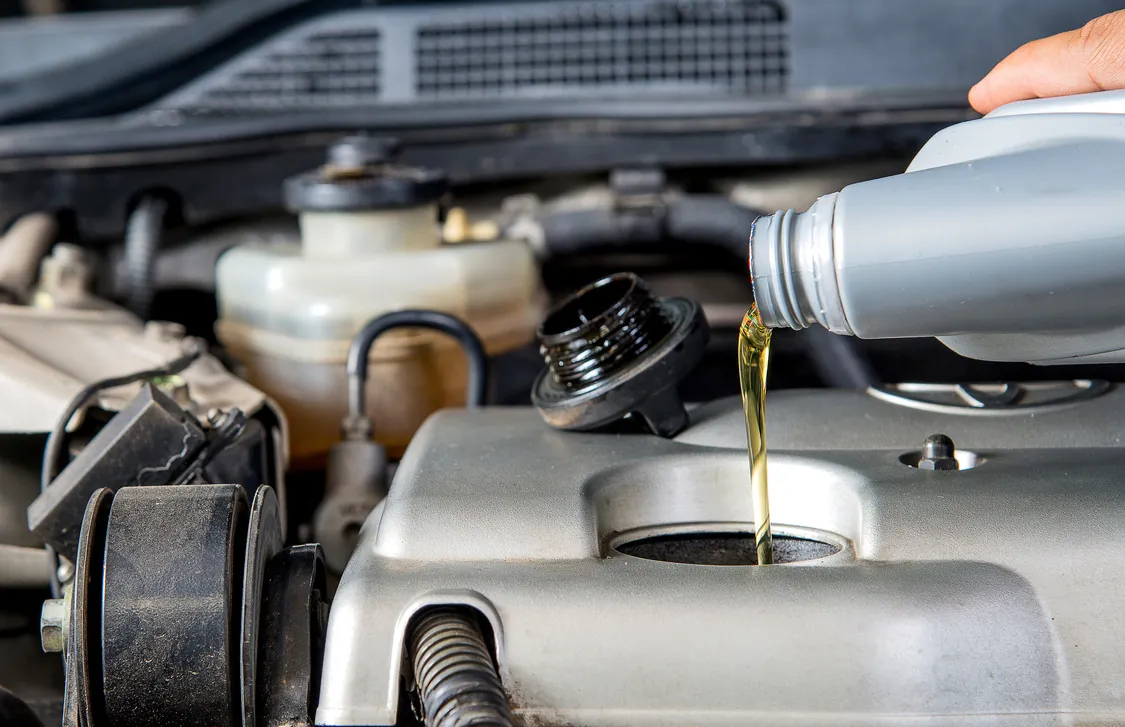
How do you know when it is time to change the oil? Does too little or too much oil harm the engine? What happens if you drive on old oil? Should the filter…
These are the most common questions any vehicle owner asks, and, curiously, they often get different answers, usually for lack of correct information. The most important thing is to follow the carmakers' own recommendations, which explain lubricants and their maintenance in the owner's manual.
The first recommendation is to read the owner's manual. There, the manufacturer states the change intervals and the right type of oil for the engine. The interval to follow is always the one set by the carmaker. There is no such thing as a 5,000 km, 10,000 km or 15,000 km oil. Every lubricant has a service life that must be respected, because after that it loses its properties.
Driving on old oil causes wear on engine components, overheating and, in extreme cases, even breakdowns or a seized engine. Anyone who drives under severe conditions should cut the change interval in half, and anyone who barely uses the vehicle should usually change the oil by time (generally every 6 months).
The same goes for filters. Every time the oil is changed, the filter should be changed too, so that old impurities do not contaminate the new oil. The filter also has a limited life: it keeps trapping the impurities carried by the oil until it becomes saturated, which makes sludge more likely. Sludge in the engine or its parts is the solidification of oil, caused mainly by contamination. Some sludge is inevitable, but it can be kept under control with proper maintenance and oil changes at the right intervals and specifications.
It is essential to use the viscosity the manufacturer recommends. An oil thinner than specified may fail to lubricate, because the oil pressure will be too low and the film between the metal parts too thin, causing premature engine wear. A thicker oil can make starting harder and also cause wear, because the upper parts of the engine take longer to receive the lubricant.
The oil may also darken or its level may drop. That is perfectly normal and does not always mean the oil is past its life. Dark oil shows that it has carried away dirt from inside the engine, produced by burning fuel. A lower level can mean anything from a natural consumption foreseen by the carmaker to a leak. Since oil stays on the cylinder walls, and the combustion chamber can reach 1,200 degrees, burning up to 1 liter of oil every 1,000 km is considered normal. Beyond that, when the level gets critically low, which may point to a leak, a red warning light usually comes on in the dashboard.
To avoid future problems, check the engine oil level regularly. Driving with too little oil can overheat or seize the engine. Too much oil, on the other hand, creates unwanted pressure in the crankcase, burns oil and fouls spark plugs and valves.
Found these tips useful? Follow us on social media to stay up to date!