
Lubrioil Lubrificantes
Track technology for your car
Our products are developed with the latest technology on the market and superior-quality raw materials. Take care of what matters most — we take care of your car.

Who we are
High-performance lubricants, from the lab to the track
A complete range of high-performance lubricants, with quality additives and production technology, developed with competitively priced base oils and additives and with investment in advanced packaging, formulations and specifications that meet the most diverse applications.
At the plant, our laboratory checks the quality of every blend: we screen raw materials, characterise trace impurities and contamination, and measure the performance of the oils we produce with the utmost precision.
Lubrioil is part of Ultrax Brasil, one of the largest independent lubricant companies in the country.
Get to know Lubrioil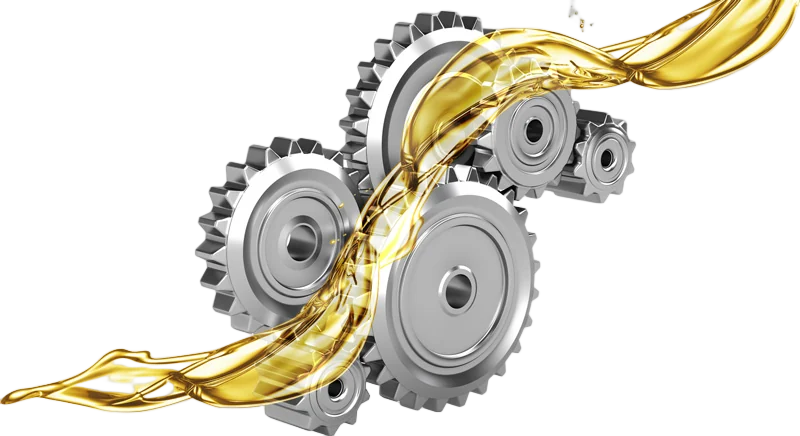

- products in the range
- 93
- lines, from cars to industry
- 9
- certified products
- ANP
- technology proven on the track
- Stock Car
Products
A Lubrioil oil for every engine
93 products in 9 lines, from cars and motorcycles to trucks, tractors and industry.
-
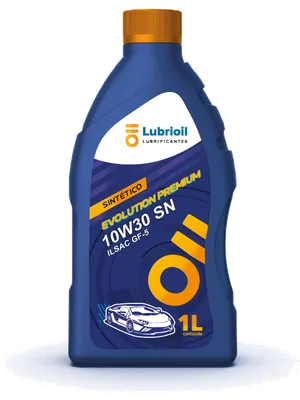
Passenger cars
Engine oils for cars and light utility vehicles running on gasoline, ethanol, flex-fuel, CNG, hybrid and light diesel — from mineral to synthetic. 26 products -
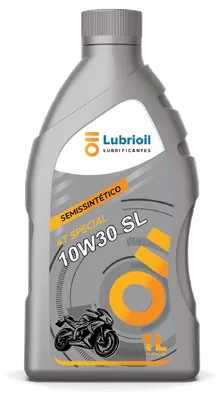
Motorcycle & marine
Oils for 4-stroke motorcycles, 2-stroke gasoline engines and outboard engines. 4 products -
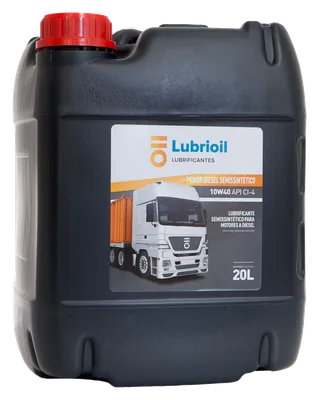
Heavy duty
Oils for the diesel engines of trucks, buses and machinery, and for stationary engines. 8 products -
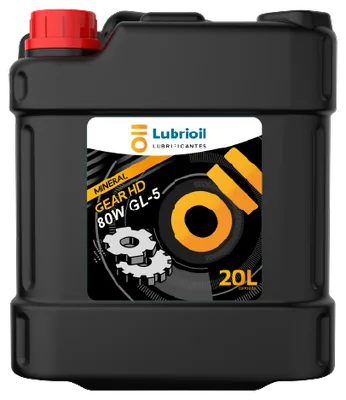
Gear oils
Oils for the gearboxes and differentials of cars, buses, trucks and farm machinery. 9 products -
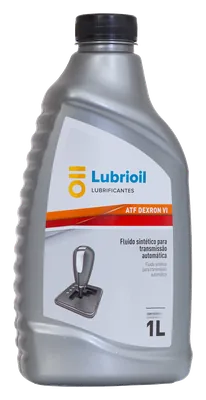
Transmission
Fluids for manual, automatic and CVT transmissions, power steering and tractor transmissions. 12 products -
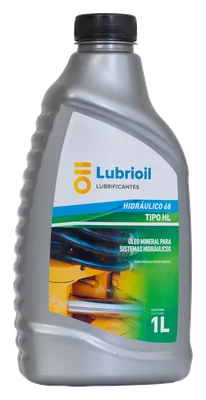
Hydraulic
Oils for hydraulic systems, compressors and milking-machine vacuum pumps. 15 products -
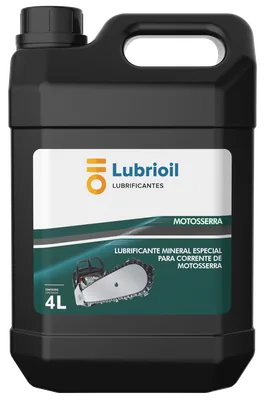
Industrial
Oils for reducers, pneumatic equipment, air compressors and chainsaw chains. 14 products -
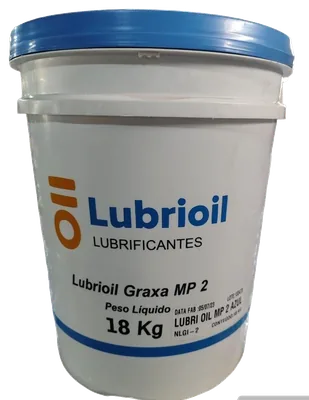
Greases
Lithium and calcium greases for bearings, wheel hubs and chassis joints. 3 products -

Treatment line
Treatment additives for gasoline, ethanol, diesel and CNG engines. 2 products -
Which oil should I use?
Tell us your vehicle or equipment and we will recommend the right Lubrioil product. Talk to us
Highlights
Meet some of our products
-
Mineral
LUBRIOIL HIDRAULICO ISO 68
Hydraulic -
Semi-synthetic
LUBRIOIL POWER DIESEL SEMISSINTÉTICO SAE 10W40
Heavy duty -
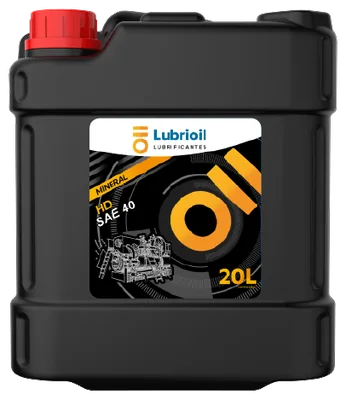 Mineral
LUBRIOIL HD 40 - ESTACIONÁRIO SAE 40
Heavy duty -
Synthetic
LUBRIOIL EVOLUTION PREMIUM SAE 10W30
Passenger cars -
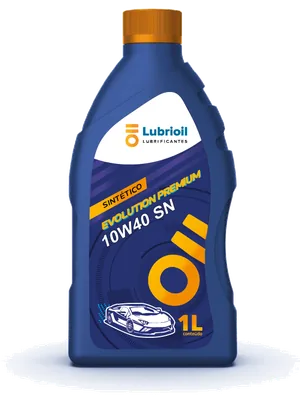 Synthetic
LUBRIOIL EVOLUTION PREMIUM SAE 10W40
Passenger cars -
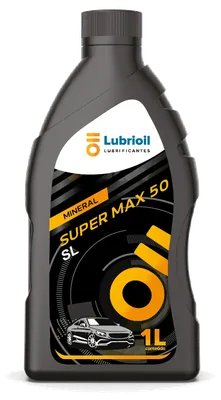 Mineral
LUBRIOIL SUPER MAX SL SAE 50
Passenger cars -
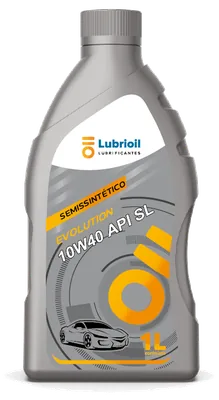 Semi-synthetic
LUBRIOIL EVOLUTION SAE 10W40
Passenger cars
Technology from the track
Lubrioil lubricants are in Stock Car race cars, on the track and in the cars and trucks of thousands of Brazilians.




For every engine
Performance at every moment
Our products serve a wide range of vehicles, motorcycles and equipment.
- ANP-certified products
- Value for money and long life





FAQ
Questions? We are here to help
The most common questions about lubricating oils.
See all 12 questionsWhat is engine oil for?
Lubricating oils place themselves between moving surfaces (in machines and engines), forming a thin film over the metal so that the parts touch as little as possible. By reducing friction, lubricants help prevent wear on engine parts.
Lubricants also keep the engine clean: they hold metal particles and carbon residue from incomplete fuel combustion in suspension, removing deposits and dirt from between the parts.
Modern car engines run at high temperatures to be more efficient. Engine oil, synthetic oil in particular, plays an important role in temperature control and helps the engine run better.
Which oil is right for my car? What is viscosity?
The right lubricant is defined by its viscosity and its performance level (API/ACEA), according to your vehicle's engine and the carmaker's recommendation.
Viscosity is a fluid's resistance to flow: it measures how hard it is for the oil to run. The more viscous a lubricant is, the harder it flows, and the better it stays between two parts to lubricate them. But viscosity is not constant. Temperature is the main factor: as temperature rises, viscosity drops and the oil flows more easily.
Most engine wear happens at a cold start. A very viscous oil struggles to circulate and reach the upper parts of the engine. Once the engine is warm, the oil becomes thinner and may not cling well enough to keep the metal parts lubricated and protected.
The Viscosity Index (VI) measures how much the viscosity changes with temperature.
What do the numbers and letters on the oil bottle mean?
They describe the lubricant's application, viscosity and performance. These classifications were created by international research bodies and manufacturers, based on performance, protection and other tests, to rank lubricants by performance, function or application. In practice, the right product is always the one chosen by the engine or machine manufacturer, based on these tests.
For automotive use, the Society of Automotive Engineers (SAE), in the United States, created a criterion that classifies oils by viscosity with a number. The higher the number, the more viscous the oil; the lower the number, the more fluid it is.
The SAE classification for engine oils goes from 0W to 25W, where W stands for “winter” and indicates an oil treated to stay fluid at low temperatures, that is, how well it flows at a cold start.
A multigrade oil rated 20W50, for example, behaves like a 20W oil at a cold start and like a 50 when the engine is hot. The viscosity improvers in the formula keep it fluid when cold and thicker at high temperatures, so the metal parts stay lubricated and protected.
Another classification is the API rating, developed by the American Petroleum Institute, which defines the oil's additive level.
Additives are chemicals blended into the oil in balanced proportions to improve its performance. The API rating is based on performance levels, that is, on the kind of service the engine or machine will face. As engines and equipment evolve, lubricants evolve with them.
The rating uses two letters. The first one defines the service: “S” for Service Station (spark ignition, the type of engine in modern cars). The second one defines the performance. Today, oils for four-stroke ethanol, gasoline and natural gas engines are rated from SL to SP, where L is the minimum additive level currently required by Brazil's National Petroleum Agency (ANP) and P is the highest and most complete on the market.
In other words, the further along the alphabet, the greater the oil's protection and cleaning power, and the higher its performance.
Diesel engines follow the same logic with a different naming: the most common oils use C for the service (“compression”) and D, E, F, G or H for the additive level. Numbers were added to indicate the engine type (two- or four-stroke). CK-4, for example, is the latest and most modern rating.
Besides the API, other international organizations also classify lubricants. In short:
- ACEA: European Automobile Manufacturers' Association, the European classification, equivalent to the American API.
- JASO: Japanese Automotive Standards Organization, the Japanese classification. It also rates two-stroke engine oils (FA, FB, FC).
- ILSAC: International Lubricant Standardization and Approval Committee, a joint body of American and Japanese carmakers that sets minimum performance levels for engine oils.
Each carmaker also has its own specifications: every brand approves oils under its own registered numbers, in addition to the API or ACEA ratings, depending on the country of origin. For example:
- Volkswagen VW 502.00/505.00 corresponds to 5W30
- Renault/Citroën corresponds to ACEA A3
- GM (USA) uses API
- ACEA (Europe) = API (USA)
- ACEA A2 = API SL
- ACEA A1/A3 = API SM
- ILSAC GF-5 = API SN
What is the difference between mineral and synthetic oils?
Lubricating oils are made by combining base oils and additives. There are two kinds of base oil: mineral and synthetic.
Mineral oils come from crude oil, which is processed and refined to remove unwanted elements such as waxes or contaminants that could affect the product's quality.
Synthetic oils are produced in the laboratory from complex chemical combinations, resulting in a purer product designed specifically for modern engines, with more protection and performance. That is why they cost more than other oils.
Semi-synthetic lubricants combine and balance both types of base oil in their formula, bringing together the best of each at a more affordable cost.
Blog
Our blog
Read our latest articles.
-
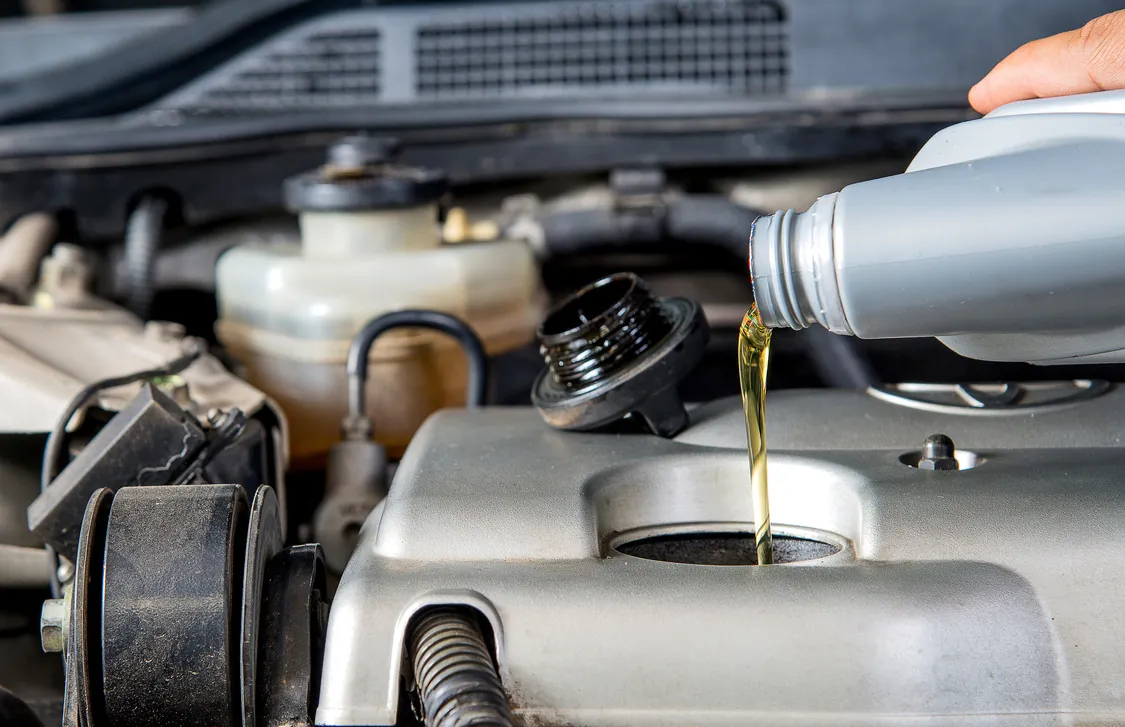
Oil changes: when and why?
How do you know when it is time to change the oil? Does too little or too much oil harm the engine? What happens if you drive on old oil? Should the filter… Read article -

All about the cooling system
Have you ever wondered how a car's cooling system works? Read on to find out. Read article -
What is a lubricant?
What exactly is this fluid that matters so much to cars, and what is it for? Read on. Read article
Quality policy
Ultrax do Brasil sees its customers as business partners and works for their satisfaction through efficient processes and excellent products and services, committing to the continuous improvement of its systems and processes and to compliance with quality legislation.
Where to buy Lubrioil?
Talk to us on WhatsApp or through the form and we will point you to the nearest reseller.